
Tattoo Etiquette: What’s Rude to Your Tattoo Artist?

If you’ve ever wondered what’s considered rude to a tattoo artist, the answer probably isn’t what you think.
Changing your mind isn’t rude. Having a budget isn’t rude. Asking questions isn’t rude. And telling your tattoo artist that you don’t like part of a design definitely isn’t rude.
Most tattoo artists would much rather you communicate openly.
The problems usually begin when clients don’t realise how much work happens outside the hours they actually spend in the tattoo studio.
Tattoo artists are artists, but also self employed professionals running a business. We answer enquiries, create custom designs, organise appointments, order supplies, prepare equipment, clean our workspaces, manage accounts and social media and somewhere amongst all of that, we actually tattoo.
At Avant Art Tattoo Studio in Chippenham, Wiltshire, we work with clients every day, and most are an absolute pleasure.
But there are a few pieces of tattoo etiquette we wish more people understood.

Cancelling a Tattoo Appointment at the Last Minute
Imagine going to work tomorrow and being told:
“Actually, we don’t need you today. You won’t be paid.”
For a self employed tattoo artist, that is essentially what a last minute tattoo cancellation means.
If you cancel at short notice, finding another client who is available, likes the artist’s work, wants a suitable project and can suddenly attend tomorrow is often impossible.
At Avant Art, we have a two week cancellation policy.
It isn't there to punish clients. It protects time that has been reserved specifically for you.
If something genuinely unavoidable happens, tell your artist as soon as you can. What becomes frustrating is knowing for several days that you probably can’t attend and waiting until the last possible moment to say so.

Complaining About Tattoo Prices
Tattoo prices don’t only represent the amount of time the needle is touching your skin.
They also reflect years of training and experience, drawing and design time, equipment, single use supplies, insurance, studio costs, cleaning, administration and the technical skill involved in permanently tattooing somebody’s body.
Different tattoo artists also charge different amounts depending on their experience, demand, location and working style.
If the tattoo artist you want is outside your budget, neither side is necessarily being unreasonable.
Sometimes your budget and their price simply don’t match.
It’s always fine to ask what can realistically be achieved within your budget.
Negotiating an artist's rate or telling them they charge too much simply because their price is outside your budget, is different.

A Tattoo Deposit Isn’t Just Paying Someone to Hold a Date
One of the most common misunderstandings around tattoo bookings is:
“I didn’t get the tattoo, so why can’t I have my deposit back?”
At Avant Art, we take a 50% deposit when an appointment is booked. That deposit doesn’t mean the artist gets paid in full if you cancel.
The deposit helps cover the costs already involved in taking on your appointment: studio running costs, supplies, tax, administration, time spent answering emails, planning your tattoo and preparing or drawing your design.
The remaining 50% is paid on the day of your tattoo and that is an important part of the artist’s actual income.
So when an appointment is cancelled last minute and we can’t fill that space, both sides lose something. You lose your deposit, but the artist loses the remaining 50% they were expecting to earn from that working day.
We don’t get paid a full day’s rate for doing nothing. We’ve simply protected part of the financial loss caused by reserving a working day that can no longer be sold.
This is why our cancellation policy exists, and why giving as much notice makes such a difference.

Treating Your Tattoo Artist Like a Printer
You’re paying for the tattoo, so naturally you should have a say in what goes onto your body.
But if you’ve specifically chosen a tattoo artist because you love their work, there has to be some room for them to actually be an artist.
One thing tattoo artists hear surprisingly often is:
“You have complete creative freedom!”
…followed by a long list of instructions about exactly how every element should look, where everything should sit, how large each detail should be and precisely how the final design should be composed.
That isn’t really creative freedom.
There’s nothing wrong with knowing what you want. Tell your artist what matters to you, what you definitely want included and what you absolutely don’t want. But dictating every tiny detail can leave so little creative freedom that the artist is essentially being asked to reproduce instructions rather than create a piece in the style you chose them for.
A tattoo design also has to do more than look good on a screen. It needs to work with your anatomy, fit the area of the body, remain readable, be technically tattooable and age appropriately.
That might mean your artist suggests changing the scale, simplifying an element, adjusting the placement or approaching part of your reference differently.
They’re not ignoring your idea. They’re using their experience to make it work as a tattoo.
The best custom tattoos usually happen somewhere between your vision and your artist’s expertise.
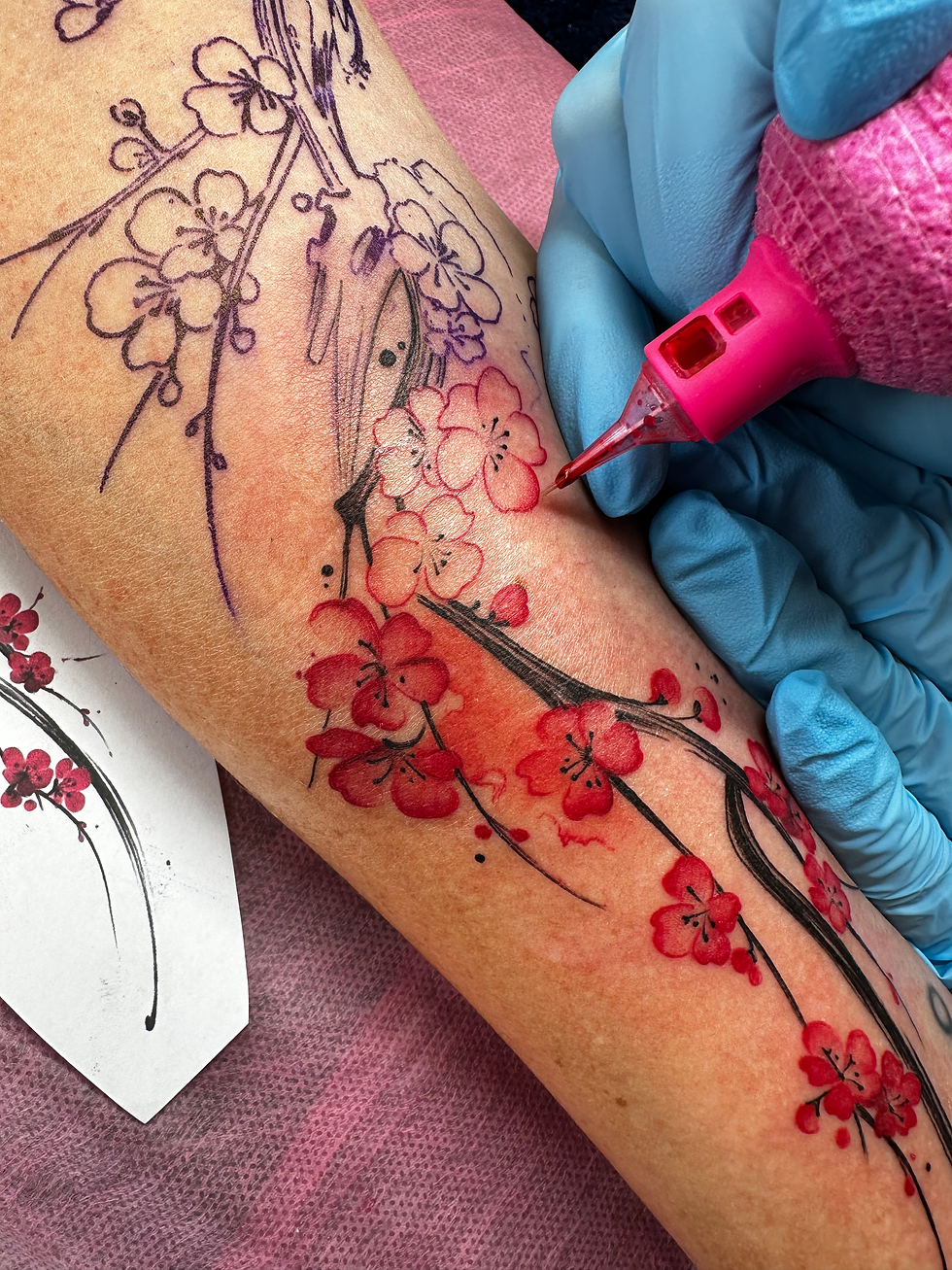
Completely Changing the Tattoo Design at the Last Minute
Changing your mind isn’t rude.
Your tattoo is permanent. If you’re unsure about something, we want to know.
If you want the stencil slightly smaller, an element moved or a detail adjusted, tell us.
Please don’t stay quiet because you’re worried about offending your tattoo artist.
But there is a difference between:
“Could we make these leaves a little smaller?”
and:
“I know we’ve planned a botanical back piece, but I’ve decided I want a realistic tiger instead.”
On the morning of the appointment.
Custom tattoo designs can take hours to create.
A completely different concept can mean abandoning that work and starting the entire creative process again.
It can also change how long the tattoo will take, what equipment is needed and whether the appointment you’ve booked is even suitable for the new project.
If your tattoo idea changes significantly, contact your artist as soon as possible.
The appointment may need to be moved so that your artist has enough time to redesign the project properly.

Ignoring Aftercare Advice
Your artist can create a beautiful tattoo, use appropriate techniques and provide detailed tattoo aftercare instructions, but once you leave the studio, looking after it becomes your responsibility.
Ignoring aftercare instructions and then blaming the tattoo artist when the tattoo heals badly can be incredibly frustrating.
Picking scabs, soaking a fresh tattoo, exposing it unnecessarily to sunlight, using unsuitable products or ignoring hygiene advice can all interfere with healing.
If you’re unsure about something during the healing process, ask your tattoo artist.
We would much rather answer a question than have you guess.
And if something hasn’t healed as expected, be honest about what happened.
Tattoo artists understand that healing isn’t always completely predictable. Different bodies and areas of skin can respond differently.
Aftercare is a partnership: we create the tattoo and give you the information you need to care for it; you take over once you leave the studio.

What Isn’t Rude to a Tattoo Artist?
It isn’t rude to ask how much your tattoo will cost.
It isn’t rude to ask questions.
It isn’t rude to request a stencil adjustment.
It isn’t rude to say that you’re unsure about part of your design.
It isn’t rude to need a break during your tattoo.
And it isn’t rude to decide that you aren’t ready to book.
Professional tattoo artists want you to communicate.
There is a huge difference between advocating for what you want permanently tattooed onto your body and treating an artist’s time or expertise as though it has no value.
So, What Makes a Good Tattoo Client?
You don’t need to know tattoo terminology or bring your tattoo artist presents.
And you definitely don’t need to sit silently for seven hours because you’re scared of being annoying.
Good tattoo etiquette is actually very simple.
Communicate clearly. Respect the appointment you’ve booked. Give as much notice as possible if something changes. Be upfront about your budget. Read the studio’s cancellation and deposit policies. Follow your tattoo aftercare instructions. Tell your artist if something about the design doesn’t feel right.
And remember that there is a person on the other side of your appointment.
Most tattoo artists understand that life is unpredictable.
Usually, the difference between a difficult situation and a difficult client is simply how it’s communicated.
Avant Art Tattoo Studio is a professional tattoo studio in Chippenham, Wiltshire, creating custom tattoos across a range of styles.
Whether you’re researching your first tattoo, looking for an experienced tattoo artist in Chippenham or planning your next custom tattoo, we’ll guide you through the process from your initial enquiry and consultation to your tattoo appointment and aftercare.
We believe the best tattoos come from a good relationship between artist and client: you bring your ideas, preferences and trust; we bring our creativity, experience and technical knowledge.
If you’d like to discuss a tattoo idea, explore the artists and portfolios at Avant Art Tattoo Studio or get in touch with us to start your enquiry.
Avant Art Tattoo


